
CEAC Status Guide
Select the status shown in the Consular Electronic Application Center to understand what it may mean, which stage your immigrant visa case is in, and what you should usually check next.

What Does Your CEAC Status Mean?
Select the exact status displayed in CEAC to see a plain-language explanation and the usual next step.
Understanding Common CEAC Immigrant Visa Statuses
The CEAC case status tracker gives immigrant visa applicants a short status such as At NVC, In Transit, Ready, Refused, Issued, Expired, No Status, or Administrative Processing. These labels can be confusing because they do not always explain exactly what is happening behind the scenes.
The most important thing to remember is that your CEAC status should be read together with any message or instructions you received from the National Visa Center (NVC) or the U.S. embassy or consulate handling your case.
You can check your case through the official CEAC Visa Status Check.
Ready
Ready generally means the U.S. embassy or consulate has received your immigrant visa case and is prepared for the next consular step.
If your interview has not happened yet, continue preparing for the interview and follow the instructions from the embassy.
Ready does not mean your visa has already been approved.
Refused
The word Refused can sound final, but it does not always mean your immigrant visa case is permanently denied.
Some cases appear as Refused because the consular officer needs additional documents or because the application is undergoing additional processing under INA section 221(g).
The U.S. Department of State changed the CEAC display in 2020 so that many cases previously shown as “Administrative Processing” now appear as “Refused.” Read the Department of State explanation.
If you received a 221(g) letter or document request after your interview, follow those instructions carefully.
Administrative Processing
Some immigrant visa applications require additional review after the interview.
This is commonly called administrative processing.
Depending on the case, the embassy may need additional documents, security checks, medical information, or other review before making a final decision.
Your CEAC status may still display Refused while this processing is taking place.
Processing times vary from case to case, so applicants should follow the instructions provided by the embassy rather than relying only on the CEAC status page.
The Department of State provides more information about what can happen after an immigrant visa interview on its After the Interview page.
Issued
Issued is generally the status applicants are hoping to see.
It means the immigrant visa has been issued.
However, you should still wait until you physically receive your passport containing the visa before making non-refundable travel plans.
When you receive the visa, check the information carefully and make sure your name, date of birth, visa category, and other details are correct.
What Happens After the Visa Interview?
After an immigrant visa interview, several things can happen.
The visa may be approved and later show Issued in CEAC.
The officer may also request additional documents, place the case into administrative processing, or refuse the application under section 221(g) until additional information is provided.
If the officer gives you a written notice or asks you to submit something, that instruction is more important than repeatedly checking CEAC.
You can also review the Department of State’s official Immigrant Visa Interview information.
What If My CEAC Status Does Not Change?
CEAC does not always update immediately.
A status remaining unchanged for several days does not automatically mean there is a problem.
If the embassy requested documents, make sure you submitted everything using the method they provided. If the case is undergoing administrative processing, there may be nothing else you need to submit unless the embassy contacts you.
Avoid sending repeated inquiries simply because the CEAC status has not changed.
If your case has been pending significantly longer than the timeframe provided by the embassy or Department of State, use the official contact instructions for the embassy handling your case or visit the Department of State NVC contact page.
🔍 Understand Your Status
Get a plain-language explanation of common immigrant visa case statuses.
📍 See the Case Stage
Learn whether the case is generally at NVC, moving to the embassy, ready for interview, or in post-interview processing.
✅ Review the Next Step
See what official message, letter, document request, or government instruction you should check next.
CEAC Statuses Explained
✅ At NVC
✅ In Transit
✅ Ready
✅ Refused
✅ Issued
✅ Expired
✅ No Status
✅ Administrative Processing
📋 NVC Document Checklist
Prepare your National Visa Center documents.
📝 DS-260 Interactive Guide
Learn each section of the immigrant visa application.
⏳ Priority Date Tracker
Track the age of your immigrant petition.
📊 Visa Bulletin Calculator
View historical Visa Bulletin movement.
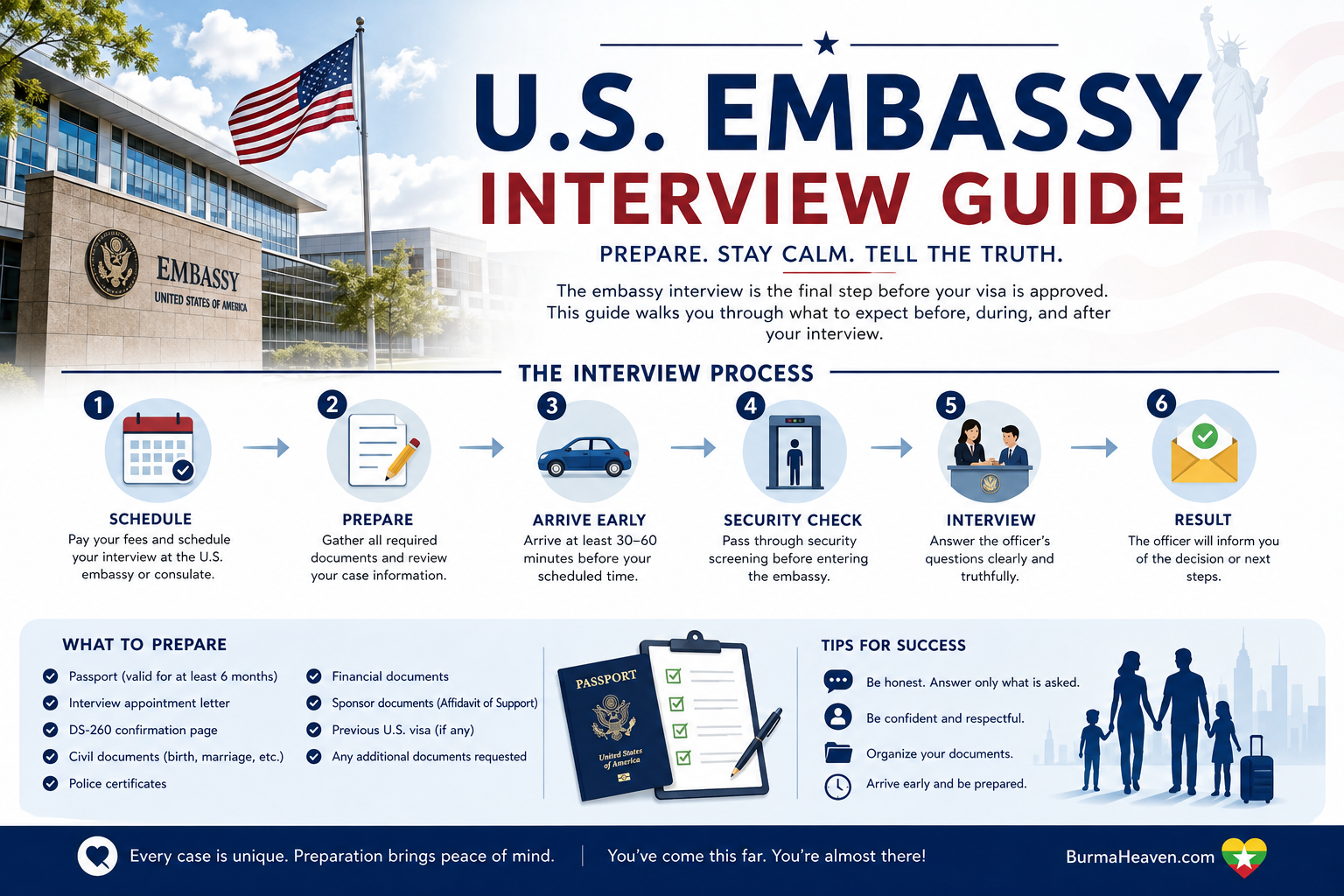
If your case is still at NVC, use our NVC Resource Center. If your interview is scheduled, use our Embassy Interview Guide.
Frequently Asked Questions
What does “At NVC” mean?
It generally means the case is still being handled by the National Visa Center. NVC may be creating, reviewing, holding, or preparing the case for interview scheduling. CEAC messages and NVC correspondence provide the specific instructions for the case.
What does “In Transit” mean?
It generally means NVC has sent the case to the U.S. embassy or consulate that will handle the immigrant visa interview.
Does “Ready” mean my visa was approved?
No. Ready generally means the embassy or consulate has received the case and is prepared for the next consular step. It does not itself mean the visa has been approved.
Does “Refused” always mean the case is permanently denied?
No. A case refused under section 221(g) may still be waiting for requested documents or additional administrative processing. The written refusal notice and embassy instructions explain what happens next.
What does “Issued” mean?
Issued generally means the visa has been approved and issued. Wait until you physically receive the passport containing the visa before making irreversible travel arrangements.
Why does CEAC show “No Status”?
This may happen when the case has not yet appeared in the tracker, the entered information does not match, the case is being transferred, or the system has not updated. For recently approved petitions, compare the timing with NVC’s current case-creation timeframe.
Explore More Immigration Tools
Continue learning with our free immigration checklists, interactive guides, and educational resources.
📄 Consular Electronic Application Center (CEAC)
Official Website
CEAC is the online portal used for many visa applications and case status checks.
Common Reasons to Visit
Upload required documents (when applicable)
Complete Form DS-260
Complete Form DS-160
Check immigrant visa status